
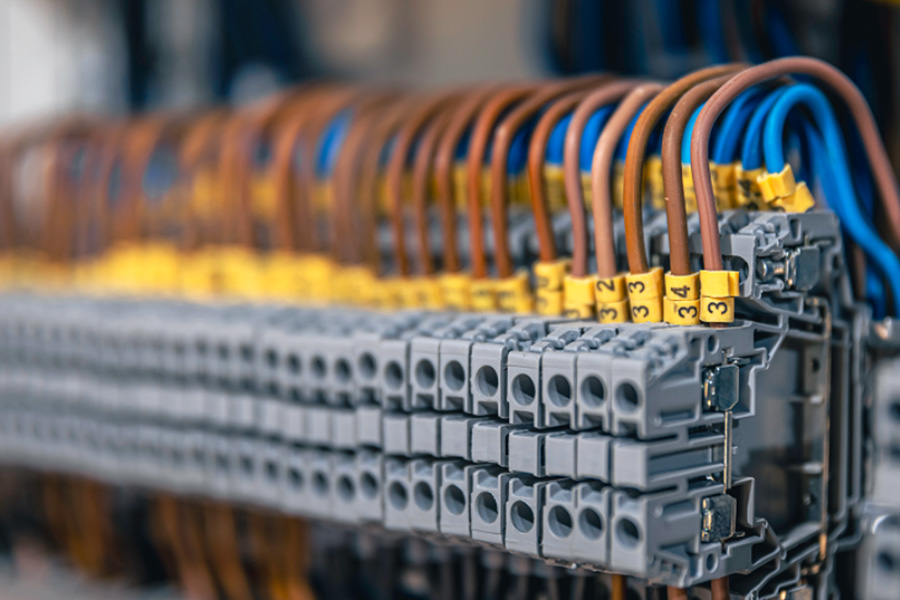
The Impact of Connector Quality on Industrial Network Reliability
Key Takeaways
- Reliable connectors stabilise communication and reduce system faults
- Weak connections often cause subtle, hard-to-trace disruptions
- High-quality connectors withstand harsh industrial conditions
- Strong network foundations improve efficiency and minimise downtime
Introduction
There is a tendency to focus on the obvious when discussing industrial automation. Controllers, sensors, and software platforms often dominate the conversation, and understandably so. They are visible, measurable, and easy to evaluate. Yet, tucked behind these systems are smaller components quietly holding everything together.
Connectors rarely invite attention, but their role is far from minor. A network may be designed to perfection, but its reliability ultimately depends on how well each connection holds under pressure. When communication falters, the issue is not always complex. Sometimes, it comes down to something as simple as the quality of a connector.
The Subtle Risk Behind Everyday Connections
At installation, most connectors perform exactly as expected. They fit securely, pass initial checks, and support smooth data transmission. Nothing appears out of place. Over time, however, differences in quality begin to surface.
A lower-grade industrial Ethernet connector may struggle to maintain consistent contact, especially in environments where vibration is constant or temperatures fluctuate. The result is not always immediate failure. Instead, the system develops intermittent issues. Signals weaken, packets drop, and machines begin to respond with slight delays.
Such disruptions rarely announce themselves clearly. They appear as minor inefficiencies, the kind that are easy to dismiss at first. Yet, within industrial communications, even small inconsistencies can accumulate, eventually affecting productivity in ways that are difficult to ignore.
Why Signal Integrity Is Never Optional
Stable communication depends on more than just connectivity; it relies on clarity. In industrial communications, every signal carries instructions that machines must interpret without hesitation. If that signal becomes distorted or inconsistent, the system’s response will inevitably suffer.
High-quality connectors preserve signal integrity by reducing interference and maintaining proper shielding. This ensures that data moves through the network without distortion. In contrast, connectors of lesser quality introduce noise into the system, gradually eroding performance.
Within industrial automation environments, where precision drives output, this distinction becomes critical. Machines rely on accurate data to function correctly, and any compromise in communication can lead to unexpected behaviour. Over time, what begins as a minor irregularity can evolve into a more serious operational concern.
Built to Endure, Not Just to Function
Specifications can suggest reliability, but real-world conditions often tell a different story. Industrial environments present challenges that go beyond standard testing parameters. Machinery generates constant movement, airborne particles settle into components, and temperatures rarely remain stable.
Connectors designed for such conditions account for these variables. They feature secure locking mechanisms, durable materials, and shielding that resists interference. Their purpose extends beyond basic functionality; they are built to maintain performance over time.
In contrast, connectors that lack this level of engineering may meet initial requirements but struggle to sustain them. The difference lies not in appearance, but in resilience. Over extended periods, that resilience determines whether a system remains stable or gradually becomes unreliable.
A Practical Approach to Choosing the Right Components
Selecting connectors for industrial automation does not require unnecessary complexity, but it does demand careful consideration. Compatibility with existing systems is essential, yet durability and performance should carry equal weight.
Solutions tailored for industrial communications offer a clear advantage. They address the specific demands of high-speed data exchange while accounting for environmental stress. A well-chosen industrial Ethernet connector supports consistent performance, allowing networks to operate without interruption.
In Singapore’s manufacturing landscape, where efficiency and reliability are closely linked, these decisions have tangible outcomes. Stable networks contribute to smoother workflows, reduced maintenance, and greater confidence in system performance.
Conclusion
The reliability of an industrial network is shaped by every component within it, including those that often go unnoticed. Connector quality plays a decisive role in maintaining stable industrial communications and supporting efficient industrial automation systems.
When connections remain strong, operations continue without disruption. When they do not, even the most advanced systems can falter. Choosing dependable connectors is therefore not a minor consideration, but a fundamental step towards long-term reliability.
For high-quality solutions that support reliable industrial networks, contact YT Automation today.