
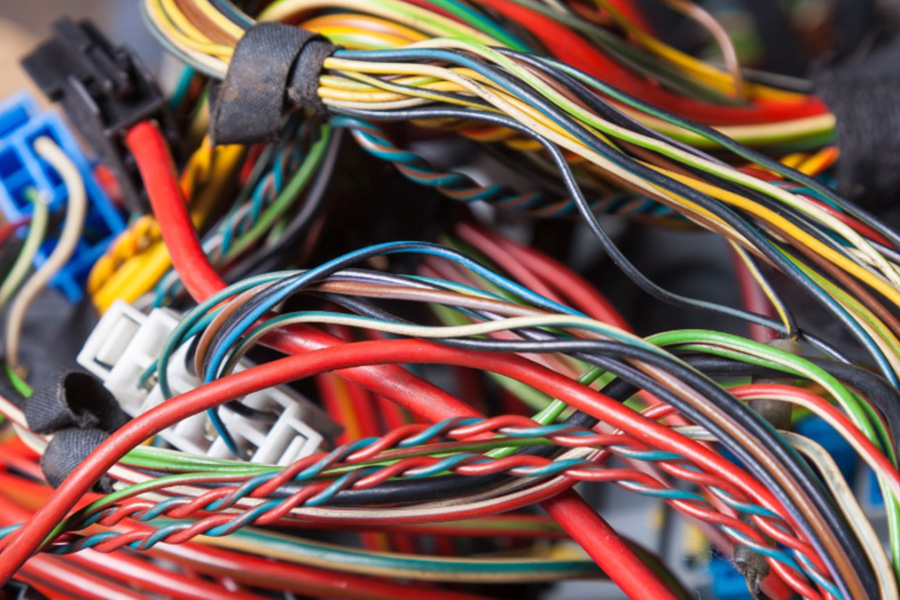
Why Wire Harness Quality Matters More Than Price for Indian OEMs
Walk the floor of any major assembly plant in Pune or Chennai today, and the tension is obvious. Production volumes are aggressive. Margins are uncomfortably tight. When procurement teams sit down with a dense Bill of Materials, it is incredibly tempting to squeeze the lowest possible quote out of companies that manufacture wire harnesses in India. Especially for a component the end consumer will never even see.
I get the instinct. Spreadsheets demand cuts.
But treating the wiring—the actual nervous system of your machine—like a cheap commodity is a massive miscalculation.
The Indian manufacturing market is scaling fast, but regulatory patience has completely vanished. According to recent data trends analyzed by automotive standard bodies, nearly 30% of electrical field failures in domestic vehicles trace directly back to poor harness integrity and insulation breakdown. MoRTH guidelines now aggressively enforce mandatory recalls for these exact safety defects.
We recently saw a mid-sized OEM experience an 8% field failure rate on a newly launched EV line. The issue was not the battery cells or the motor. It was low-grade harness insulation that simply melted under peak thermal load.
That recall wiped out their quarterly profit. Gone. Just like that.
Indian environmental conditions do not forgive cost-cutting. A vehicle’s electrical architecture has to survive the brutal thermal cycling of a Rajasthan summer, corrosive coastal humidity, and aggressive, constant road vibration. If a supplier is not strictly adhering to IPC/WHMA-A-620 manufacturing standards—if they are outsourcing their basic thermal shock and terminal pull testing—those connections will eventually shake loose.
This brings up a critical safety boundary. We need to be absolutely clear here: dealing with high-voltage EV networks is not an area for procurement experiments. A degraded wire in a high-voltage system does not just strand a driver on the highway. It introduces a catastrophic thermal runaway risk. It is a direct life-safety liability, and the legal exposure for an OEM is absolute.
This strict standard of safety applies just as heavily to the consumer durables sector. Modern appliances are drawing heavier, more erratic power loads than ever before. A compromised internal connection on a commercial AC unit or washing machine is a fire hazard waiting to happen. That is exactly why knowing where to source reliable power cords in India is fundamentally an exercise in risk management. You are protecting your end-user from the unpredictable voltage spikes that still hit our regional grids.
At Nisan Cords, we see the aftermath of bad procurement decisions all too often. Quality isn’t a premium feature you can casually negotiate away in a boardroom. It is the baseline.
When you review your next vendor contract, look well past the unit price. Demand to walk through their testing labs. Ask hard questions about their copper extrusion standards. A heavily tested, well-engineered electrical system costs a little more upfront, but it is the only way to ensure your product actually survives the real world.